Sunday, May 15, 2016

"He no come to office yesterday?"


Nine months down in Bangladesh, time for a little sum-up.

Best: 
Temporary job.
I am inifinitely grateful for a six months' position until the end of August. Being busy has given a new, wonderful dimension to everyday life here. An air-conditioned office, meaningful work and a very modest salary are a true blessing.

Worst: 
Missing home.
Especially during high holidays I really wonder what I'm doing here on the other side of the planet where almost everything is different from my traditions and values. Why am I not taking care  of and sharing joys and sorrows with my family and close friends at home. 


Frightening:
Recent thunderstorms have been crazy. Lightning has killed more than 80 people this year. 

Saddening:
Local election violence. More than hundred have been killed in election clashes.
Worsening security situation, terror, increasing intolerance. Escalating political violence.


Dangerous:
Police is supposed to get harder on people who drive on the wrong side of the road. Dhaka's overcrowded roads and streets are an open invitation for all kinds of creative and dangerous solutions in traffic. More than 1100 people have been killed in traffic from January to April.

Embarrassing:
Still no knowledge of Bangla.
At the same time Bangla-English has become far too attractive to make oneself easily understood. I was rather shocked when I heard myself asking: "He no come to office yesterday?"
Still not ready for Wimbledon. How can it be so difficult to hit a ball over a low net? Fortunately, my husband now shares the humiliation of under performing with me.

Irritating:
Our apartment - so old and worn that even the lizards have arithritis and grey beard. Only cold water available.
Dhaka is full of new apartments, one of them will hopefully be our new home soon. 

Charming:
A horizontal, swinging head movement of the local people. I don't know what it means or how they do it (I have practiced it for hours in front of the mirror - with no luck), but  I simply love it.

Touching:
The resilience of the ordinary people. Most people work so hard, they earn so little but they are so kind. 

Motivating:
Yoga, zumba, bokwa, pilates, whatever. I bring my decaying old body and enjoy. There is not much else to do in Dhaka so sweating in a small room with strangers is one of the best things I know.

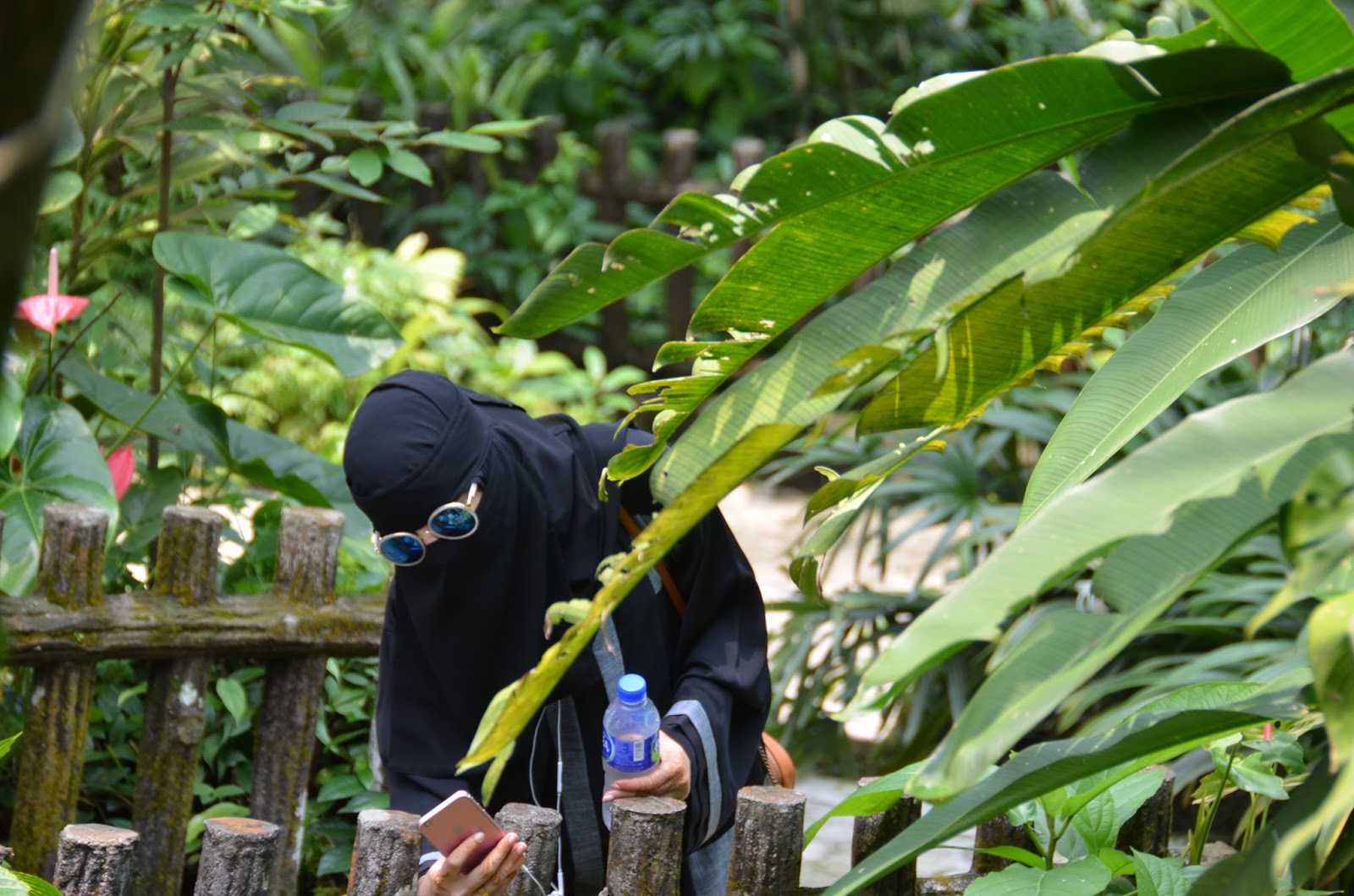
The pictures this time are cellphone shots. Dhaka's streets are like huge potato fields these days. The sewage renovations are supposed to be ready soon.  Bangla soon.

I stopped eating fish when I understood where the local fish comes from. 


Sunday, May 1, 2016

The essence of terror

Just as Bangladesh started to feel secure again, we are experiencing a new and bloody wave of terror here.
Last fall foreigners were  the target of the terrorists. Now liberal Bangladeshis are the prey.

Last week three people were killed because one of them loved music (he was a professor), the other two worked for human rights (they were gay). 
Yesterday a Hindu taylor was killed for derogatory Muslim comments four years ago.

All recent killings and numerous previous ones were conducted by assailants cutting their victims' necks with a machete. 
Extremely brutal and cruel. 

After the attacks, the killers just disappear in the busy streets or nobody sees them in the empty streets.
Extremely strange and scary. The essence of terror.

I talked to a local person who is really afraid.  This person represents many of the Bengalis I know and like: they are liberal, have traveled widely, educated, are not extremely religious.
My acquaintance is now afraid of walking in the streets, has stopped posting on Facebook and beefs up security measures at home and at work.

I have a feeling that in Dhaka's streets there are more and more women totally or almost totally covered. A burkha could save my acquaintance's life but kill her soul.


Saturday, April 23, 2016

Tragedy and happiness


Even people who know little of Bangladesh will probably recognize the words Rana Plaza.
I was one of them. 
Three years ago a building where your and my t-shirts were made, collapsed. More than 1100 people died, 2500 were injured.


Rana Plaza became a symbol of the price of the cheap clothes that we buy. I knew little of Bangladesh at that time and considered to boycott anyting made in Bangladesh.


Now I know better (at least I hope so) and would not boycott these products though the life of most Rana Plaza victims is still unbearable.

I have met some of the survivors. They are unbeliavable: so much energy, so many ideas, so little bitterness.
The garment industry provides over 70 per cent of the total exports in Bangladesh. Four million women sew t-shirts. These women work hard and earn close to nothing but at least they have the opportunity to make some money and maybe some time  they can sell their expertise for more complicated tasks than the simplest garments.  You and I must be willing to pay a little bit more for their work.
Eventually they can send their kids to school for a better future.


On this note, living in Bangladesh has given a new dimension of being happy. 
There is so much poverty, so much misery, so much inhumanity.
 Whenever you open a newspaper you are confronted with the most awful stories of gang rapes, killings, revenge, incurable sicknesses, poverty, frustrating inequality.


Still, people tell all the time that they are happy. They actually look happy. One of my readers commented on this (thank you!). People here have the talent of being happy for elementary thing and they actually show that. 
The other night we met a man who was washing himself and his clothes in the middle of the main street, Dhaka's Fifth Avenue, and was happy. He was happy and showed it. A good lesson for the most of us.


Thursday, April 14, 2016

Happy Bengali New Year!

Bangladesh celebrates New Year today with large outdoors festivities, music, processions, dance and fairs.
This is a non-religious holiday and it has a uniting and joyous character. Like a Rio Carnival minus  bikinis and  beach, add covering clothes and sweat, keep the heat and the crowds. Welcome year 1423!


The party begins early in the morning, continues with large lunches together with family friends and relatives and also includes shopping, preferably jewellery.
Well, this is what I was told. 


Getting up at sunrise was not an option for me but there were large crowds even later in the morning when I wandered in my residential area. Dhaka University is the hotspot of the day but that will be next year. A newcomer has to start somewhere.

This applies also to an abundant New Year's meal. My stomach has been kind of rebellious. And ok, I have no family here, so no lunch invitations.. 
What concerns shopping, I was a rather good new year's celebrator. No jewellery but a pair of gold colored sandals.


People are dressed in their best clothes, the color code is red and white.
Women  have flower decorations in their hair and they wear perfect makeup.
It is a mystery how they can look so beautiful in this heat (38 Celcius and very humid). I left home looking relatively normal but came back like a soaked panda with mascara running down to ears, hair glued to scalp and sweat dripping from top to toe.


On New Year's Eve we had another earth quake in Dhaka. The epicenter was 400 kilometers east of Dhaka in Myanmar. The strength was 6.9. 
I was at yoga during the tremor. I thought that my muscles were shaking because of the exercise. It was only after the class we realized that the fitness center was emptied (minus the yogis) and phones were filled with concerned messages.

Tuesday, March 29, 2016

Bangla rash i Kuala Lumpur


A short Easter break took us to Kuala Lumpur, Malaysia, last week.
The decision of our destination was made very randomly. One of my colleagues  - yes, I'm a working girl now - showed pictures of Kuala Lumpur and I was immediately sold. 
Urban, clean and organized. More sterile than Bangkok, less expensive than Singapore.


The most fascinating was, however, the versatility of the city. 
The streets were full of totally covered women but also tourists wearing next to nothing. It seemed that all colors, races and religions formed a functional mix.


Of course, there are tensions under the surface. Malaysia  is a multiracial society with a good half of the population Malays, almost quarter Chinese and round ten per cent Indians. Muslims, hindus, wealth worshippers, non-believers.
Tourism is the country's third largest source of income. 


I don't know what is happening with me but it seems  that Dhaka is getting under my skin, a serious case of Bangla rash.


Instead of just enjoying a long weekend with delicious food in Kuala Lumpur I was constantly thinking of different solutions for Bangladesh. Could this be possible in Dhaka? Why is this not done in Bangladesh? How can we (did I just say we) solve this?


The attractions in Kuala Lumpur are as versatile as the the city itself.  The Petronas Twin Towers were majestetic night and day. The endless shopping centers were many and busy. The streets were clean, traffic controlled.


Just outside the city center is a paradise for a flower lover: a park full of orchids, hibiscus and floral tranquility. 


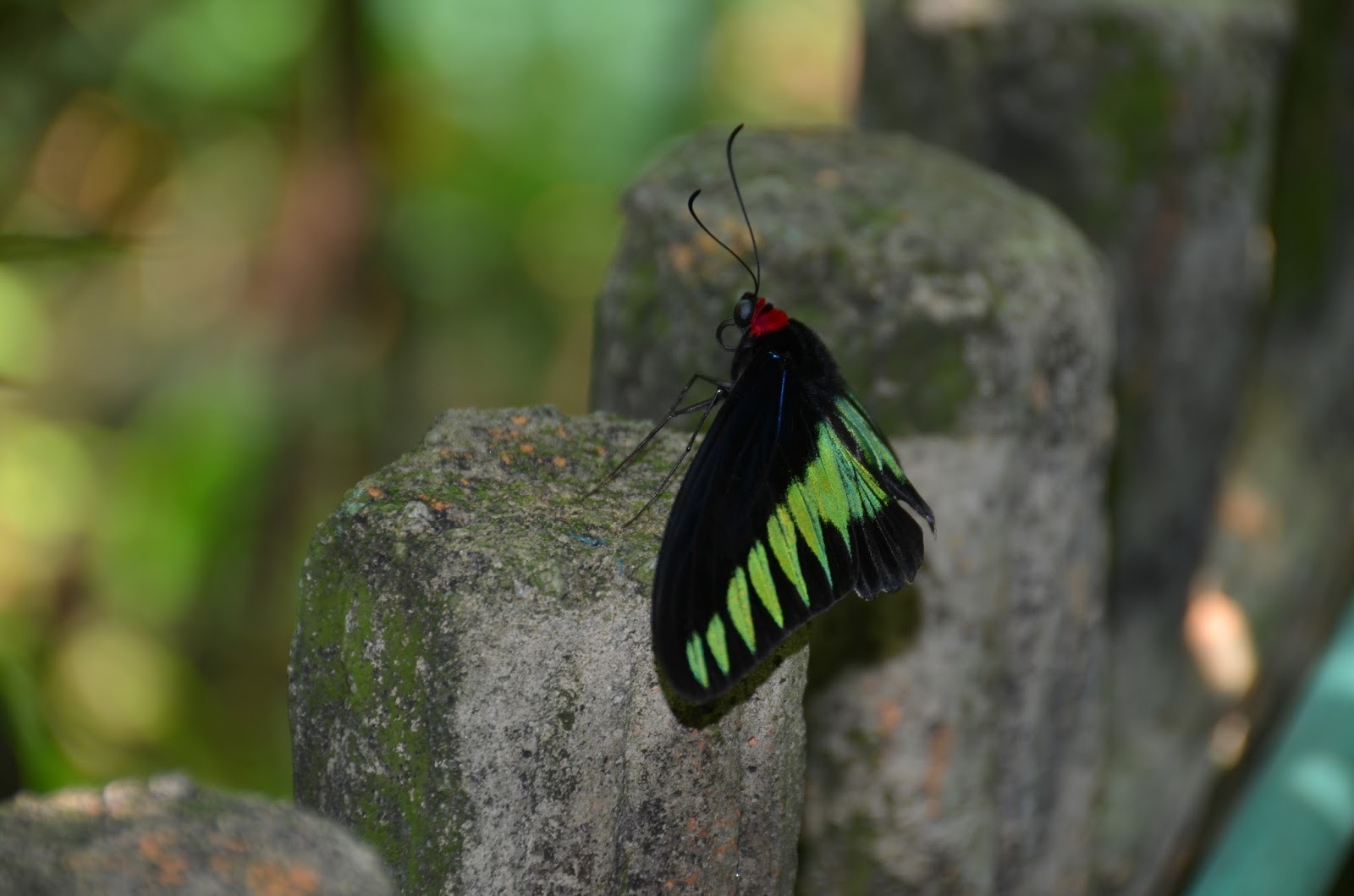
We also visited a butterfly park (beautiful but very warm) and a bird park (too many birds are actually scary). 


Saturday, March 19, 2016

Dhaka Tea Party


 Tea stalls are the Bangladeshi variant of sidewalk cafees. 
Instead of coffee, the stalls sell tea and insted of sitting on a chair,  customers either squat, sit on wooden benches or stand.


Rest rooms are simply an open sewage always close by.
The menu is quite identical in most places: tea, biscuits, cakes, cigarrettes, bananas and paan (green leaves filled with tobacco and spices). 


From a foreigner's view, the prices are rather low: tea with milk and sugar costs about six taka (seven cents), a cake seven taka. 


The more established tea stalls cook water in large pots and wash tea glasses in small buckets. 


These stalls are covered with a cloth or a roof which gives both shade and protects from rain.


The "mobile" stall  is actually one man carrying hot water in thermos bottles and the rest of the merchandise in his hands or on top of his head. When he finds a suitable location for his business, he simply squats down, and the cafe is open.


Most of the customers are men. They hang around, drink tea, smoke, chew paan and talk. I have been told that tea stalls are the place for gossip and political debates.


Dhaka has a couple of "Western" cafees, too. They are mostly frequented by foreigners (in shabby outfits) and rich dhakaites (all dressed up). 
Out of security reasons, there are no sidewalk cafees where one could sit and do serious people watching. 
The most Western at these places are the prices - a cup of tea can cost as much as a rickshaw puller earns during a successful day.

Saturday, March 12, 2016

Flower Power


A confession first: I am crazy about flowers. 
I buy flowers when I'm sad, I buy flowers when I'm happy, I buy flowers when it's Monday and when it's not Tuesday.

During years, a remarkable amount of our disposable income has gone to seeds, plants, bouquets, roses, tulips, daffodils.
Thus, it's not a surprise that very soon after our arrival in Dhaka last August I found my flower man.

He usually sells me ten roses for 600 taka, round seven euros. He always adds a couple of "complimentary roses only for Madam" and smiles a lot. 
Now I know why.
This weekend we visited Shadullapur's area, about an hour's drive from Dhaka, to see rose farms. I was told that they cultivate a lot of roses there.


A lot was actually an insult. 
We saw millions and millions of roses. Small fields, bigger fields and very large fields. 


Every night farmers cut flowers and transport them to wholesale markets where they are further sold to retailers and finally to me, for example. 
By my flower guy.


Acoording to the rose farmer we met, the flower business has become much more profitable than vegetable business. 
The "rose index" is a clear sign that the Bangladeshi middle class is growing and people can afford to buy flowers for celebrations and parties. 
The farmer told - through our driver as an interpreter - that the winter time was very lucrative. The flowers were in perfect shape, the demand high because of the wedding season and Valentine's day, and the prices were high.


The warm weather has now had an effect on the posture of the roses. They are less crispy and cheaper.
I bought a large bunch of about hundred roses. The farmer asked for 400 taka, we paid 500 (about six euros). Everybody was smiling.