Saturday, March 19, 2016

Dhaka Tea Party


 Tea stalls are the Bangladeshi variant of sidewalk cafees. 
Instead of coffee, the stalls sell tea and insted of sitting on a chair,  customers either squat, sit on wooden benches or stand.


Rest rooms are simply an open sewage always close by.
The menu is quite identical in most places: tea, biscuits, cakes, cigarrettes, bananas and paan (green leaves filled with tobacco and spices). 


From a foreigner's view, the prices are rather low: tea with milk and sugar costs about six taka (seven cents), a cake seven taka. 


The more established tea stalls cook water in large pots and wash tea glasses in small buckets. 


These stalls are covered with a cloth or a roof which gives both shade and protects from rain.


The "mobile" stall  is actually one man carrying hot water in thermos bottles and the rest of the merchandise in his hands or on top of his head. When he finds a suitable location for his business, he simply squats down, and the cafe is open.


Most of the customers are men. They hang around, drink tea, smoke, chew paan and talk. I have been told that tea stalls are the place for gossip and political debates.


Dhaka has a couple of "Western" cafees, too. They are mostly frequented by foreigners (in shabby outfits) and rich dhakaites (all dressed up). 
Out of security reasons, there are no sidewalk cafees where one could sit and do serious people watching. 
The most Western at these places are the prices - a cup of tea can cost as much as a rickshaw puller earns during a successful day.

Saturday, March 12, 2016

Flower Power


A confession first: I am crazy about flowers. 
I buy flowers when I'm sad, I buy flowers when I'm happy, I buy flowers when it's Monday and when it's not Tuesday.

During years, a remarkable amount of our disposable income has gone to seeds, plants, bouquets, roses, tulips, daffodils.
Thus, it's not a surprise that very soon after our arrival in Dhaka last August I found my flower man.

He usually sells me ten roses for 600 taka, round seven euros. He always adds a couple of "complimentary roses only for Madam" and smiles a lot. 
Now I know why.
This weekend we visited Shadullapur's area, about an hour's drive from Dhaka, to see rose farms. I was told that they cultivate a lot of roses there.


A lot was actually an insult. 
We saw millions and millions of roses. Small fields, bigger fields and very large fields. 


Every night farmers cut flowers and transport them to wholesale markets where they are further sold to retailers and finally to me, for example. 
By my flower guy.


Acoording to the rose farmer we met, the flower business has become much more profitable than vegetable business. 
The "rose index" is a clear sign that the Bangladeshi middle class is growing and people can afford to buy flowers for celebrations and parties. 
The farmer told - through our driver as an interpreter - that the winter time was very lucrative. The flowers were in perfect shape, the demand high because of the wedding season and Valentine's day, and the prices were high.


The warm weather has now had an effect on the posture of the roses. They are less crispy and cheaper.
I bought a large bunch of about hundred roses. The farmer asked for 400 taka, we paid 500 (about six euros). Everybody was smiling.


Saturday, March 5, 2016

A celebration of colors


Most female foreigners staying in Bangladesh for a longer period of time buy a saree sooner or later. 
In my case later. 
I would probably have postponed the purchase even longer if my dear friends hadn't invited me to a tour to Narsingdi on Friday. 


Narsingdi is good hour's drive from Dhaka and the place is one of the largest textile markets in Bangladesh.


The whole are is dominated by textile industries. Textile mills, dying and embroidery houses are situated close to Narsingdi. The road sides are decorated with freshly dyed textiles in clothes lines.


The bazaar like market is a visual symphony of silk, cotton and glitter. 


The narrow paths between the thousands of small stores were packed with people carrying piles of textiles in all possible colors, towels, blankets, bedding. 


It was hot, dusty and absolutely fabulous.


The market is for whole sales but the store owners wholeheartedly helped retail customers too. 
Like always, we as Western women were a big attraction and were followed by a crowd of "assistants" giving advice on styles and bargaining.


The huge selection was the problem. How could I find my piece of saree in this place which has textiles to cover the distance to Moon and back, three times?


But miracles happen. In one of the stores, a perfect piece of eight meters of green silk was winking to me, calling my name. 
Love at first sight. 
Now I am just waiting for an invitation from the President, Prime Minister og anybody in order to wear my gorgeous outfit.

Saturday, February 27, 2016

A teacher and toilet paper


A couple of days ago I had an interesting  but also depressing chat with a Bangladeshi teacher at an event. 
The young man comes from simple conditions but moved to the capital for an education, got a job and is raising a family. In addition to his wife and a little child, he has to support his parents back home and contribute to his in-laws. 


He also has a vast responsibility in teaching the next Bangladeshi generation so that his students can land to better paid jobs and get a life a bit easier than his is.
The teacher spends about an hour and a half to work every morning. He walks, takes a bus and a rikshaw. That is, when the traffic is good. 
In the evening the same distance can take up to two hours. Sometimes he needs to take an auto rikshaw which is faster but ruins his budget. The cost is about 120 taka (1.4 euro).
After work the teacher has a short break at home before he goes to his private students, to make the economy go round.
The dedicated teacher didn't tell this to complain but politely responded my  inquisition.


People have different hang-ups. Mine is toilet paper. For six months I have been looking for a good toilet paper in Dhaka. I was dreaming of a soft, thick, beautiful variety. 
The search was very little successful.
Now the hunt concentrates on something decent.
The local brands are thin, hard and not user friendly.
First you have to get rid of the glued part. The glue sits so tight that it could easily hold together tectonic plates. A lot of tearing and swearing.
The rest of the paper is rolled so loosely round the case that it all folds down in one, five meter long piece.


What has this to do with the nice teacher?

It shows how small my problems are and how  people struggle with real problems. In a very dignified and humble way.
Respect  and pray for the teacher.

And I try to keep that in mind while foraging for luxury bathroom tissues in Dhaka.

The pictures in this posting have nothing to with the theme. It's spring - trees are losing their leaves, flowers are blooming and an occational hailstorm whips the city. It's getting warmer.


Tuesday, February 16, 2016

Almost India


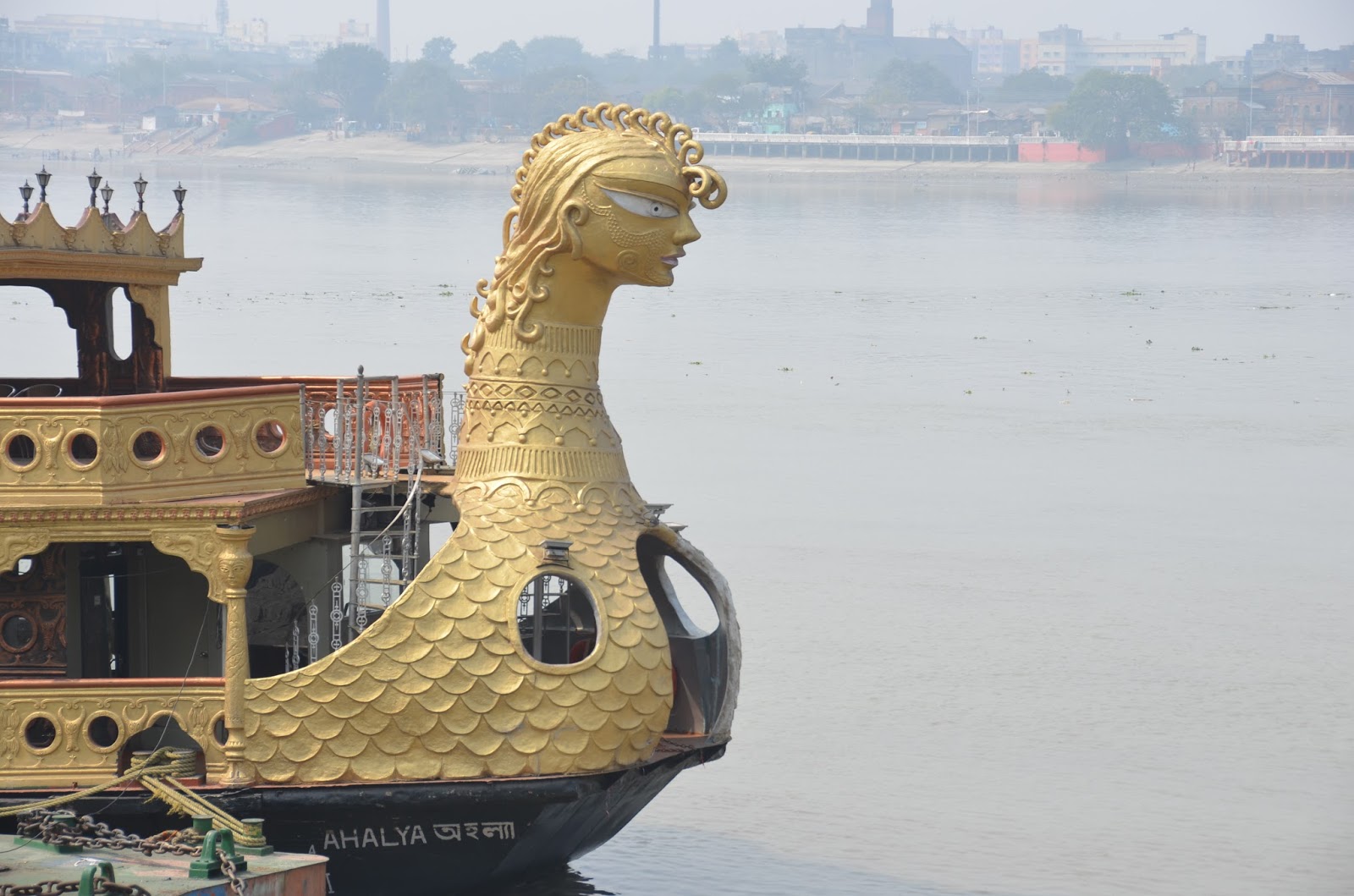
We had visas, passports, rupees, airline tickets. We flew to Kolkata, India, but landed in a place than could have been a suburb of Dhaka, Bangladesh. 


People in this Indian city look like Bangladeshi, they speak Bangla, they eat Bangla food. Kolkata is almost as chaotic as Dhaka, the streets are dirty and poverty is very visible.
Yes, everybody told me this before. Thanks everybody. I just had to see this with my own eyes.


Physically it's less than 400 kilometers between Dhaka and Kolkata but historically and culturally the cities are close. Islam is the dominant religion is Bangladesh, hinduism in India. But Dhaka has a hindu population, Kolkata a muslim one. 


Still, Kolkata in West Bengal was absolutely worth a visit. 
Our hotel was close to the area where Mother Teresa worked. She was an impressive woman but sadly enough there is a lot to do even now.


No rikshaws in Kolkata downtown, instead hoards of yellow taxis. 
But not for us since I insist on walking. I need to see, hear, smell and touch places I visit. Thus, many kilometers per day, a few complaints from my husband.


The British colonial time is very visible in Kolkata. Victoria Memorial is an impressive marble building surrounded by large gardens. 


Beautiful and at the same time a good example of the sharp division of the haves and have-nots. Wealthy white people lived in an area called the White City,  poor locals in the Black City. Very little has changed. 

Our visit coincided with the first spring days and Valentine's Day. Millenium Park by the Hooghly River attracted hundreds of young couples (or wannabes) in their best attire. The smell of hormones clearly defeated the scent of flowers.


Old days have their charm. 


So do the new.


Wednesday, February 10, 2016

Amazing art


 Never a dead moment in Dhaka. This city never sleeps, construction activities are a proof of eternity, cars honk night and day, prayer calls are organic alarm clocks.
Hyper activity also applies to the cultural scene. Dhaka offers exhibitions, shows, activities, readings, music, dance all and any time.


Enjoying culture is, however, not easy. In the crazier than crazy traffic even a short distance can take hours.

Like this week when I visited Dhaka Art Summit 2016.
The drive was about 10 kilometers but it took almost two hours, each way. 

But it was worth the effort. All the art from South Asia and beyond was  an joy and inspiration.

The exhibition consisted of solo projects, curated shows, performances and talks. It all showed both the versatility of the art and also the variety of the spectators.


The Art Summit lasted for five days, entrance was free. Everything was surprisingly well organized.  The venue was as overpopulated as Dhaka but actually huge crowds just made the experience better.